Tag Archives: Consumer Product Safety Commission

Baby Wearing Safety Standards and the CPSC

Baby Wearing Safety Standards and the CPSC

This is a guest post written by one of Gypsy Momma’s blog readers and baby wearing momma, Sarah C. Sell regarding baby wearing safety standards:

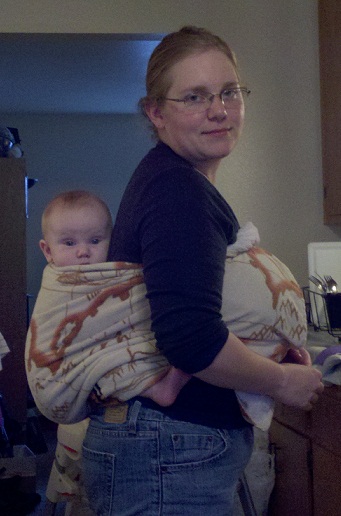
If you purchased a Moby Wrap before 2007, you received a manual with a large variety of carry styles, including the outward-facing ‘Joey’ hold and the back-carry ‘Hike’ hold.  Since then, Moby has released a much-abridged version of the manual, including only four holds and pages of additional warnings about the potential hazards of carrying your baby in a carrier.

What happened? Did the Moby suddenly become more dangerous? Were there babies who were hurt because of riding in a Moby Wrap?

Absolutely not! There are no reported incidents of babies being hurt because of a Moby Wrap. The change occurred, believe it or not, because some Chinese companies manufactured toys with paint containing excessive lead.

The link between lead paint and the Moby Wrap is a federal agency called the Consumer Product Safety Commission. Prior to 2008, the CPSC was tasked with protecting the American public by tracking incidents and investigating products to determine their safety. Whenever a product was recalled for safety reasons, the CPSC was usually the one behind it.

In 2007, the CPSC issued a record 473 recalls, primarily related to lead-infused products that were imported from China. In response, Congress passed the Consumer Product Safety Improvement Act of 2008. The Act greatly expanded the power of the Consumer Product Safety Commission, set new acceptable levels of lead in children’s products, required detailed testing of any material that could contain lead, and mandated more extensive warning labels on anything that could be viewed as risky for children ages 12 and under.

In practice, the stricter regulations have instituted a ‘guilty until proven innocent’ status for children’s products. Companies are required to reduce the potential risk of using their products practically to zero, including accounting for user error. In the case of the Moby Wrap, complying with the CPSIA includes the addition of new, graphic warning labels on their products, and the company has chosen ‘to limit the number of holds [they] show going forward,’ as ‘[some] holds are more likely to be done incorrectly.’

For the moment, Moby appears to be one of the lucky companies. The new regulations requiring additional, expensive product testing have driven many small companies, who have operated with the best of intentions and reasonable safety precautions for many years, out of business. Manufacturers of natural, sustainable toys (produced as an alternative to the plastic, lead-tainted Chinese toys) have closed their doors, unable to afford the laboratory proof that their organically-grown wooden creations with plant-based inks and dyes do not contain harmful amounts of lead. As it forces small, American-based companies out of business, the CPSIA ironically sends more business to China, with greater demand for mass-produced toys, and the cheaper product testing that is available there.

Ultimately, while the CPSC has a legitimate task in protecting the public from blatantly unsafe products, increased legislation is not necessarily the best solution. Reactions to things like the lead-painted Chinese toys ought to deal with the problem itself (the companies and factories in China), and not punish hundreds of innocent companies who are presumed guilty by association. And the possibilty that some people might tie a Moby Wrap improperly should not prevent the rest of us from using our Moby Wrap to the fullest extent possible.

Related Pages:

Back Carrying: Where East Meets West

Three Reasons to Choose a Baby Wrap for Travel

Towel vs. Moby Wrap Throw-Down

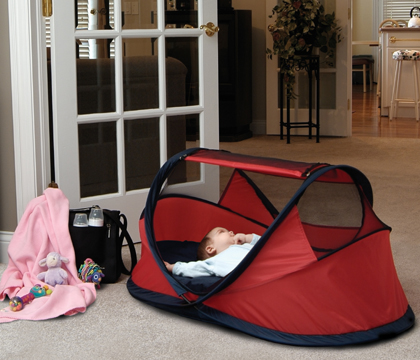
Warning: Infant Suffocation in Peapod Travel Portable Bed

Warning: Infant Suffocation in Peapod Travel Portable Bed

peapod travel bedI am posting this link here to a blog at DeliciousBaby.com that explains the warning.  A 5 month old very tragically died in the PeaPod portable bed, which an autopsy confirmed was from suffocation, not from SIDS.

Although I have never used the PeaPod myself since I have co-slept with my baby since she was born, I had read great reviews about this product and had recommended it on my blog previously.  Based on this tragedy showing that the bed may not be safe for infants, I am updating my previous blog accordingly to warn parents.

Please also spread the word to other parents that may use or may consider using the PeaPod portable crib.  This is an incident that shows why safe co-sleeping habits (as long as you are not medicated, taking drugs, or drinking), might be a safer option for baby while traveling.  My heart goes out to Dr. Christine Whelan.

Also, I know that at least two Kidco Peapods were ordered from Amazon.com from people who visited my site, clicked on the link, and purchased the product.  If you are a regular blog reader or see this post, please email to let me know if you purchased this product so I know that if you did you have seen this warning and will hopefully return the product and discontinue use.

Related Pages:

Co-Sleeping Resources

Where Does Baby Sleep While Traveling?

Do You Need a Crib in the Hotel Room?