Category Archives: Health and Safety

It is important to keep baby healthy and safe while traveling. Tips on food safety, water safety, traffic safety, immunizations and vaccinations for traveling infants, newborns, babies, and toddlers is covered, as well as practical advice on sterilizing bottles, breastfeeding, and pumping while traveling internationally to developing countries.

Yellow Fever Vaccination When Pregnant or Breastfeeding?

Yellow Fever Vaccination When Pregnant or Breastfeeding?
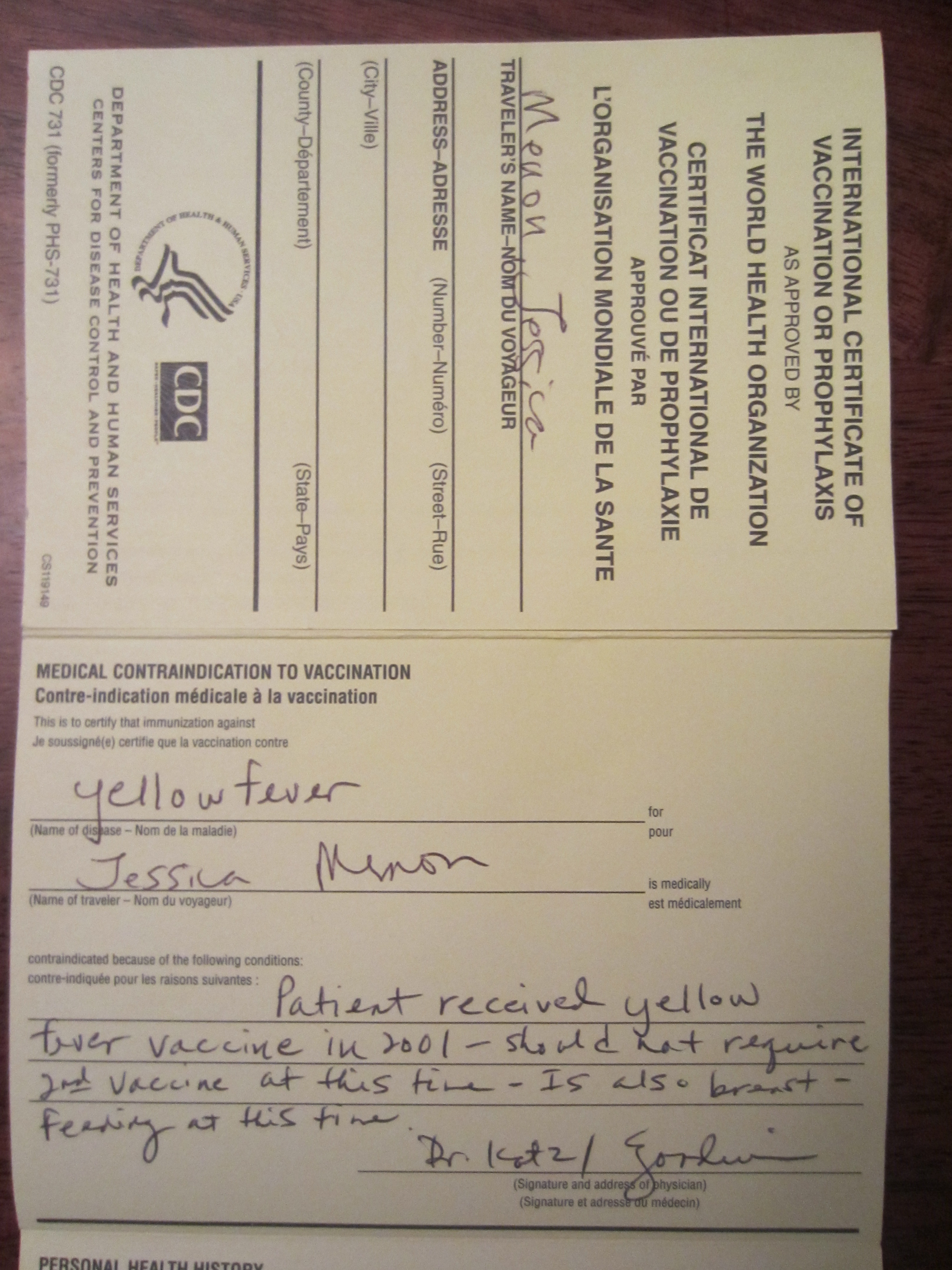
Yellow fever card

Yellow Fever Card- yellow fever vaccination is contraindicated for breastfeeding mother

In a few weeks I will set off to Haiti with my toddler and my newborn, both of whom are still nursing (aggressively).  After that we’ll also be traveling to Sri Lanka, India, South Sudan, and Kenya for a good part of the year into July.  In South Sudan, there have already been 40 confirmed cases of yellow fever this year.

For anyone who has traveled to some countries in Asia and Africa, proof of yellow fever vaccination may be well-known as a requirement to obtain an entry visa, or may be checked in order to pass immigration.  For travelers who do not have proof, they may be forced to receive the vaccination at a health clinic inside the airport (usually with a high price tag) before entering the country.

Check out the list of recommended and required yellow fever vaccination countries here.

Getting the yellow fever vaccination is something that is not only required for many sub-tropical countries, but is generally a good idea to get.  The disease is transmitted through mosquito bites; at its mildest it can cause a mild flu-type illness that eventually passes, but at its worst it can cause multiple organ failure and result in death.  There is no treatment for yellow fever, either.

Check out the Center for Disease Control (CDC)’s web page on yellow fever here, including information on the symptoms, treatment, and the vaccination.

I had the yellow fever vaccination back in 2001 before I traveled to South America.  Technically, a booster is recommended every 10 years.  However, studies point to evidence that the vaccination, which is 100% effective in preventing yellow fever, is actually effective for 30 years.  So, I should be good.  However, there is a high likelihood that I will be required to show evidence of my yellow fever vaccination at some point in my travels, especially following my trip to South Sudan.

I have three problems: 1) I lost my old yellow fever card, and since it was given to me over a decade ago, it might not be accepted, anyway; 2) it is recommended that nursing mothers not receive the vaccination (along with pregnant women and infants under nine months of age); and 3) I have been in a perpetual state of pregnancy or breastfeeding since 2010, and since we plan on having two more children, will most likely be either pregnant or breastfeeding for the next 6-8 years (yikes!), so it will be a while before I can safely receive the vaccination.

Check out the CDC’s information on who should not receive the vaccination here.

Not enough research has been done to really determine how safe it is to take the yellow fever vaccination when breastfeeding or nursing, and there have been two documented cases of breastfeeding infants that have had neurological damage attributed to the yellow fever vaccine after their mothers were vaccinated.  The vaccine is a live virus, so it can potentially do some serious damage to a little baby.

The CDC states “Yellow fever vaccination has not been known to cause any birth defects when given to pregnant women. Yellow fever vaccine has been given to many pregnant women without any apparent adverse effects on the fetus. However, since yellow fever vaccine is a live virus vaccine, it poses a theoretical risk. While a two week delay between yellow fever vaccination and conception is probably adequate, a one month delay has been advocated as a more conservative approach. If a woman is inadvertently or of necessity vaccinated during pregnancy, she is unlikely to have any problems from the vaccine and her baby is very likely to be born healthy.”

I called several travel clinics who told me I shouldn’t travel if I am breastfeeding (what!?), that I shouldn’t receive the yellow fever vaccination, and were generally super judgmental of me for taking my children to places with so many diseases.  It’s not like I’m vacationing in South Sudan- I am going their for my job.

Luckily, the travel nurse and doctor and the Children’s Memorial Travel Clinic here in Chicago were helpful.  The doctor said that since I already had the yellow fever vaccine in 2001, I should be protected against the disease for the next two decades.  He then signed a yellow fever card for me, stating that I shouldn’t receive the vaccination since I’m breastfeeding. That wasn’t so hard, was it?  So, now I have reassurance that I am protected against yellow fever, and a yellow card that may or may not get me into a couple of countries, but hopefully that will do the trick.

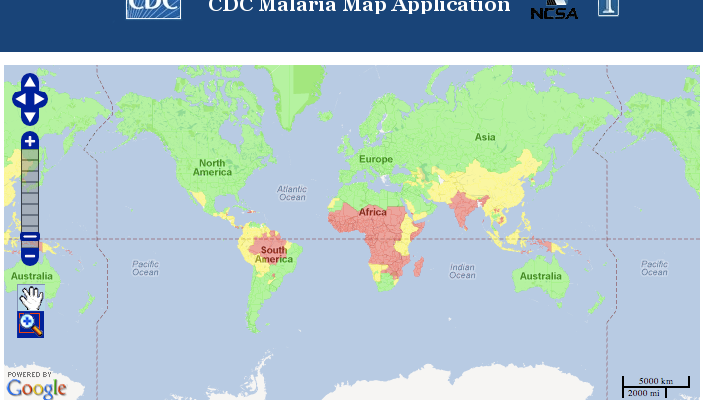
If I had not been previously vaccinated against yellow fever, I would be worried, but I still wouldn’t risk getting the vaccine pregnant or breastfeeding.  All of the places that have yellow fever also have malaria, so I am going to need to take precautions against mosquito bites, any way.  That means wearing long sleeves and pants, staying in closed and air conditioned sleep places, and wearing mosquito repellent.

Of course my one month old, who will be around six months by the time we reach South Sudan, is too little to have any  travel vaccinations beyond immunoglobulin, which is just a general immune booster.  He will also be taking 1/8 tablet of Mefloquine weekly as an anti-malarial).  Plus, he has my breast milk to also give his immune system a boost, plus he won’t be eating solid food or drinking water when we’re traveling, so some things won’t be as worrisome as others (like cholera in Haiti), but I’ll definitely be quarantining both my children in air-conditioned close spaces, plus bed nets, plus long sleeves, plus baby-safe mosquito repellent to be extra careful.

The bottom line, though, is that if you are breastfeeding or pregnant, and you must travel to a place where there is a risk of yellow fever, it may be advisable to take mosquito precautions rather than get the vaccine- just in case.

Related Pages

Health and Safety

Sunscreen Recommendations for 2012

Getting Baby Immunized

Never Leave Home without a Health Kit

Six Reasons to Choose Breastfeeding on the Go

Five Tips to Practice Water Health Safety with Baby

New Anti-Malaria Prevention and Treatment Recommendations for Pregnant Traveling Mommas

Is the Sunscreen You Use on Baby Speeding Development of Skin Cancer?

Is the Sunscreen You Use on Baby Speeding Development of Skin Cancer?

Is the sunscreen you use on baby safe, or is it actually putting baby at risk for toxins, allergies, skin cancer, and lung damage?  We slather, wipe, or spray sunscreen on our babies and toddlers in an effort to protect them from the harm of sun, such as skin cancer and burn, but some of the products- made for babies- on the market actually do more harm than good.

Check out the Environmental Working Group’s 2012 Hall of Shame of Children’s Sunscreen’s that Fail their safety test.

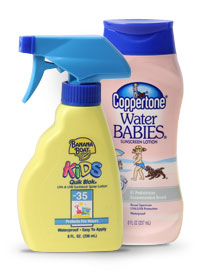
An estimated 65 sunscreens advertised for babies and kids contain oxybenzone, a synthetic chemical that absorbs the sun’s rays but also disrupts the body’s natural hormones and can cause allergic reactions.  Typical offenders include:

  • Banana Boat Kids Quik Blok Sunblock Spray Lotion, SPF 35 – 4% oxybenzone
  • Coppertone Water Babies Sunscreen Lotion, SPF 70+ – 6% oxybenzone

Almost 40 sunscreens advertised for babies and kids contain retinyl palmitate.  When applied to sun-exposed skin, it may actually speed development of skin tumors and lesions.

Common offenders include:

  • Banana Boat Baby Tear Free Sunblock Lotion, SPF 50+
  • Arbonne Baby Care Sunscreen Lotion, SPF 30
  • Australian Gold Baby Formula Lotion Sunscreen, SPF 50+

Some SPF products may protect baby from sunburn caused by UVB rays, but it may still leave baby vulnerable to skin-damaging UVA rays.  Parents who see a high-SPF label on a bottle may think it’s safe to allow kids hours of sunburn-free beach time, not seeing a burn and thinking that results in protection from skin damage and cancer down the line.  The FDA wants to limit SPF claims to “50+” to cut down on the false sense of security  higher numbers like this can impart:

  • Neutrogena Wet Skin Kids Beach & Pool Sunblock Stick, SPF 70

EWG recommends avoiding products labeled higher than SPF 50. Reapply sunscreen often regardless of SPF to protect baby not just from an immediate burn but from long-term skin damage and cancer.

Aerosol spray sunscreen packages will soon be required to display FDA-mandated warnings such as “use in a well ventilated area” and “intentional misuse… can be harmful or fatal.” These cautions highlight growing concerns that sprays pose serious inhalation risks. Spray sunscreens also make it too easy to miss a spot, leaving bare skin exposed to harmful rays.

Two aerosol sprays marketed for babies and kids:

  • CVS Kids Fast Cover Continuous Clear Spray, SPF 50
  • Rite Aid Baby Continuous Spray Sunscreen Lotion, SPF 50

Loose powder sunscreens emit a plume of airborne particles. When inhaled, they can potentially damage the lungs over the long term. If there’s a chance you can breathe it, don’t buy it.  Some brands of loose powder sunscreens contain particles of titanium dioxide, which the International Agency for Research on Cancer has classified as “possibly carcinogenic to humans” when inhaled. Powdered sunscreens may also contain nanoscale and micronized zinc oxide, which can cause lung inflammation and worse.

  • GO!screen Natural Mineral PowderBlock Brush-On Sunscreen, SPF 30 is advertised as “great for kids” on the front of the bottle. It contains zinc oxide particles.

EWG recommends that sunscreen users stay away from inhalable products – sprays and powders – and use creams and lotions instead.

For some brands, the only differences are on the label – not inside the bottle. EWG found that 16 brands in this year’s crop feature products that list the same ingredients for both baby and adult sunscreens – down to the exact amounts of active ingredients. Among them:

  • Aveeno Baby Natural Protection Mineral Block Sunscreen Lotion, SPF 30
  • Aveeno Active Naturals Natural Protection Mineral Block Sunscreen Lotion, SPF 30
  • Coppertone Kids Sunscreen Stick, SPF 55
  • Coppertone Sport Sunscreen Stick, SPF 55
So what are the best sunscreens to slather on ourselves and our precious little babies?  EWG recommends using a hat and shirt as the best, safest sun protection :) .  When you do have to expose yours or baby’s skin to the skin, EWG recommends selecting sunscreens with broad spectrum (UVA and UVB) protection with fewer hazardous chemicals that can penetrate the skin (which is the body’s largest organ that absorbs stuff directly into the blood stream).  All of EWG’s top-rated products contain either zinc or titanium minerals to filter UVA rays.
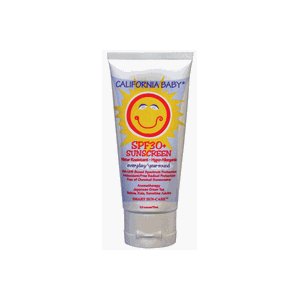
EWG rates hundreds of thousands of products, including sunscreens, on a scale of 0-10, 10 being the most toxic and cancer-risk products you can buy, and also rates them by cost ($= cheapest, $$= moderate cost, $$$= most expensive).  Check out the 195 safest and most effective sunscreens that score 1-2, which includes one of my favorites, California Baby SPF 30+ sunscreen stick, rated a 1.
With 195 safe sunscreen products to choose from, why use one that could harm baby by causing allergies, cancer or lung damage?  Also check out EWG’s Top Sun Safety TipsSunscreens Exposed: Nine Surprising Truths, and EWG’s best rated sunscreens for beach and sport, limp balms, moisturizers, and make-up.

The Environmental Working Group (EWG) is a non-profit organization, founded in 1993, advocates on Capitol Hill for health-protective and subsidy-shifting policies.  EWG specializes in providing useful resources (like Skin Deep and the EWG’s Shopper’s Guide to Pesticides™) to consumers while simultaneously pushing for national policy change.  EWG’s Organizational Goals are to: 1) To protect the most vulnerable segments of the human population children, babies, and infants in the womb from health problems attributed to a wide array of toxic contaminants; and 2) To replace federal policies, including government subsidies that damage the environment and natural resources, with policies that invest in conservation and sustainable development.

Baby and Toddler Travel Sun Gear

Baby and Toddler Travel Sun Gear

Summer is a lovely time to travel with a baby or toddler, but the sun and heat can pose risks of sunburn, dehydration, and crankiness.  Here is the latest and greatest in summer baby and toddler travel sun gear if you’re headed to the park, for a road trip, or overseas to a hot climate:

SHADE FOR STROLLERS AND CAR SEATS

summer baby travel gear

Kiddopotamus RayShade Single:

My daughter’s legs right now are five times darker than the rest of her body.  Even though we use sunscreen, none of the sun canopies on your typical stroller comes with canopies that protect her little legs from the sun (and it’s been glaringly sunny and hot in Chicago).  When I recline her for naps, depending on where the sun is and the direction we are walking, sometimes her entire body is being hit with sun despite the canopy.

This shade fits most canopied strollers to extend the sun protection, adjusted to cover the baby from head to toe.  It also provides UPF of 50 +, protecting baby from over 99% of harmful solar UVA and UVB rays .  Plus it comes with a couple of pockets for storage.

summer baby travel gear

Protect-a-Bub Single Compact Shade:

This shade is versatile as it can fit onto most canopied strollers AND car seats.   any car-seat. It is made from specially woven UPF 50+ breathable fabric that offers 98+% protection from the sun’s rays and provides full air circulation. The mesh side ventilation panels allow for 70% sun protection, cross ventilation and maximum viewing. A storage bag is included.

This is also available in a twin version for side-by-side twin strollers.  If you are concerned about bugs and mosquitoes, it is also available in the Deluxe 3-in-1 version that includes a full length mosquito net.

Summer Baby Travel Gear

Sunshine Kids Cool Shade for Car Window:

If you’re traveling in the car, it’s essential to block out the sun’s rays to protect baby and to make for better napping to avoid sun in the face, plus it keeps the temperature cooler.  This is a cool shade as it simply sticks to the window with static cling, so it’s easy to pack if you are traveling overseas, easy to install in your own car or rental car, and takes up minimal space.

Other sun shades for car windows worth checking out include: Britax 2 Pck EZ Cling Sun ShadesBrica Stretch-to-Fit Sun ShadeDream Baby Extra Wide Car Window Shade (2 Pack)Safety 1st ProGrade Soft Solution Roller Shade

baby sun gera

Mommy’s Helper Car Seat Sunshade:

This shade is used while your child is not in his/her car seat.  It helps to cool and protect the seat from heat and UV rays, keeping the seat an average of 26 degrees F cooler.  The cover stretches over the car seat with an elastic band designed to fit most car seats and comes with a built-in elastic strap to secure the shade for easy storage (it folds flat).

BABY SUN AND BEACH ATTIRE

baby sun gear

Bummis Swimmis cloth diapers:

These are excellent cloth swimmers to pack along in the diaper bag whether you are heading to a beach, pool, or an outing where you may just happen upon a water feature.  I find reusable swimmers to be convenient as I never have to worry about running out, plus it’s more economical.  They come in five different fun unisex cotton print designs, with an interior polyester mesh for easy clean ups and a coated nylon layer sandwiched inside that will hold in the messiest stuff a baby can throw at you. They have an adjustable hook and loop closure for a snug and comfortable fit.  Plus, they are made in Canada with fair labor practices using materials that are guaranteed to be lead, phthalate and bpa free.  Other cloth swimmers to consider include: Imse Vimse (which also come in fun prints), Applecheeks, Finis Swim Diapers, and Mother-Ease Swim Diaper.

baby sun gear

Planetwise Wet/Dry Diaper Bag

It’s useful to carry one or two small to medium sized wet/dry cloth diaper bags for dirty cloth diapers, used swimmers, and wet or dirty clothes.  I like the Planetwise diaper bags, which have leak free seaming to contain moisture and wetness.  The inner waterproof material and locking zipper are 100% PVC and lead free.  They come in a plethora of fun designs.  Medium size fits about 8-9 cloth diapers- they are very roomy.

Baby Sun GearNo Zone Sun Protective Baby Suit:This sun-protective baby suit has great reviews from parents that have used it.  It provides better sun protection than sunscreen minus the mess of sunscreen, and is easy to zip on/off with a lower zipper for diaper changes.  It dries quickly and easily and comes in a variety of colors and sizes from 0-24 months.  I’ve never used one of these myself, but it seems like it would be much easier and provide more sun protection than a regular baby bathing suit, especially if you are spending prolonged time out on a sunny beach.

baby sun gear

Babies have thinner skin that is more vulnerable to sunburn than adult skin and special care must be taken to ensure that it’s well protected from the sun, our solid brim sun protection hat is a lightweight upf 50+ fabric, the inner lining is a wickaway microfiber.  Also check out the iPlay UPF 50+ flap hat that provides more coverage for the neck, iPlay newborn sun hat, and a variety of other baby, newborn, and toddler sun and bucket hats.

BABY-SAFE SUNSCREEN AND INSECT REPELLENTS

baby sun gearCalifornia Baby SPF30+ Sunscreen Stick:

This is water resistant and hypoallergenic.  It is PABA free and chemical-free with highly micronized non-whitening titanium dioxide offering UVA-UVB broad-spectrum protection, and the stick makes it easier to glide onto baby’s skin.  I also use it on myself.  California Baby also makes this in lotion form which I do have and use, albeit a bit more messy (a little goes a long way).

baby sun gear

Bite Blocker Herbal Repellent Wipes:

Use a baby-safe mosquito repellent on baby’s skin that is free of DEET, parabens, phthalates, PEG’s, Sulfates, Dioxanes, Propylene Glycols, and synthetic fragrances.    You can get them in spray, lotion, or convenient wipes for travel, which is why these Bite Blocker Herbal Repellent Wipes are great.  Although there are many baby-safe all natural mosquito products on the market, some other baby-safe mosquito repellents to consider include: Burt’s Bees Herbal Inspect Repellent Spray, California Baby Bug Spray, Bite Blocker Herbal Spray, and Buzz Away Insect Repellent Towelettes.

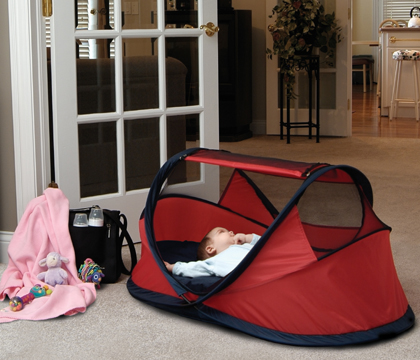
baby sun gearFor night time and naps, make sure baby is sleeping under a mosquito net.  Jeep makes a netting that fits most standard play pens or cribs, as well as netting that fits over most strollers and baby carriers.  If your family uses the family bed and you are sleeping in bed with baby, you could consider bringing with you a mosquito net big enough for the whole bed.  However, this can get big and cumbersome, and it would be preferable to instead make sure that your accommodations come with bed netting, screens, and/or air-conditioning to ensure the family’s sleeping area is protected.

KEEPING BABY HYDRATED

baby sun gear

Pedialyte Powder Packets:

Although breastfeeding is the best way to keep baby hydrated in hot weather, or if you are traveling somewhere and find that baby has traveler’s diarrhea, it’s never a bad idea to keep a few packets of powdered Pedialyte in baby’s first aid kit in the diaper bag.  It’s easy to use- just add one pack to 8 fl oz of water.  This is for babies older than one year, and it comes in a variety of fun flavors.

This is an eco-friendly, reusable, collapsible and recyclable water bottle.  It was BPA free, microbial resistant, and dishwasher-safe.  It is heat and freezer proof, microwaveable, and can hold liquids or dry goods.  It also comes with a carabiner, so it can be attached to the outside of a diaper bag or stroller when full, or it can scrunched it up inside the diaper bag (saving a lot of space) once finished.  This is great for toddlers and parents.
This is another foldable, rollable water bottle option for toddlers and parents. It stands upright when full of water, and then rolls or folds flat when empty.  It’s reusable and safe (BPA-free, with FDA-approved polyethylene inner-liner so it is odor, taste, and stain resistant).  It is also dishwasher safe, freezable, and like the Bubi comes with a carabiner so it can be attached to the outside of  a diaper bag or stroller and then stuffed away to save space once empty.


BABY BEACH, PICNIC, AND OUTSIDE GEAR

baby sun gearJJ Cole Essentials Blanket:

We get lots of use out of this blanket.  We use it in Chicago for trips to the beach at Lake Michigan, picnics at outdoor music concerts at Millennium Park, and playing under the shade of the tree in the park.  It’s water-resistant, easily wipes clean, and folds compactly.  We usually make space in our luggage when we, travel, too, as it comes in handy as a baby/ toddler play mat both indoors and outdoors, and for any outdoor/ beach outings we might have.

baby sun gearColeman Road Trip Beach Shade:

There are lots of beach shades/ tents/ canopies on the market, which can be useful when spending a day in the sun or at the beach and need some relief and protection for baby from the sun, especially during nap time.  It can also be great for the backyard.  This one is great because it is lightweight but roomy, with UV guard protection for SPF 50 + and 2 zippered doors for privacy.  It includes a carry bag, sandbags, extra-long stakes, a dry line and floor mat.

Peruse your many beach tent options here, or check out these specific options: Sun Stop’r Kwik Cabana I Instant Beach/ Backyard Cabana w/ UV Protection, Pacific Play Tents One Touch Play Cabana, Pacific Play Lil Nursery TentSchylling Infant UV Play Shade, and Sun Smarties Pop-up Cabana and Beach Tent and shaded baby pool options.

RELATED PAGES

Sunscreen Recommendations for 2012

Never Leave Home Without A Health Kit

Packing for Baby

Travel Planning


Sunscreen Recommendations for 2012

Sunscreen Recommendations for 2012

sunscreen

Yea for fun in the sun!  Nay for sun burns.  Check out the recent blog about recommended sunscreens in 2012 for babies and kids at DeliciousBaby.com.

“Every year the Environmental Working Group releases it’s annual report on safe sunscreen. It’s worth checking out, both for advice on using sunscreen properly and to find products that don’t contain harmful chemicals but do provide adequate sun protection. You might be surprised to learn that some big brands aren’t as great as you assumed.”

Related Pages

Never Leave Home Without A Health Kit

Packing for Baby


Psuedoephedrine: Why It’s Important to Check Baby’s Medications

Psuedoephedrine: Why It’s Important to Check Baby’s Medications
psuedoephedrine

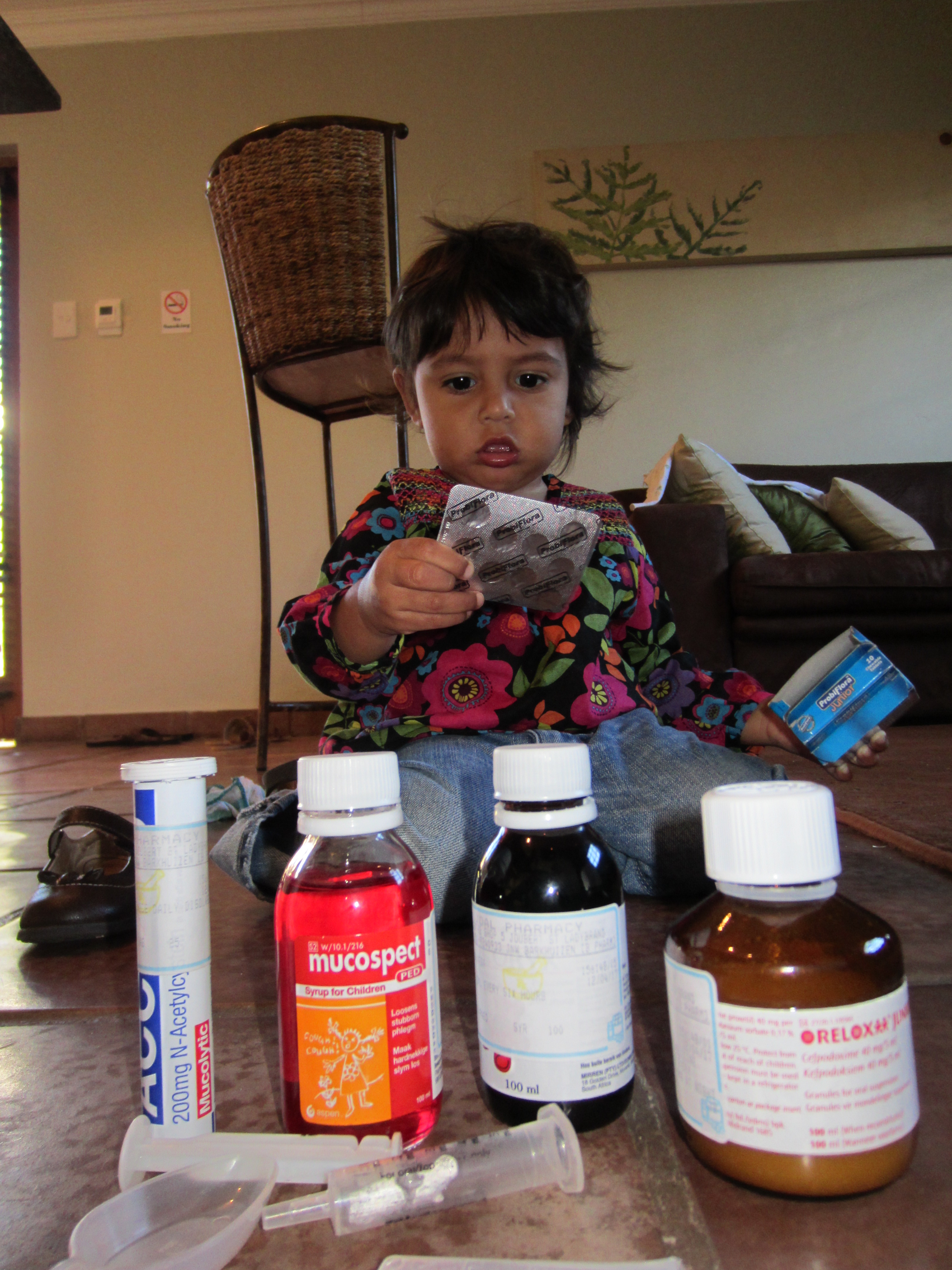
Veda trying to help mom figure out her prescriptions

Monday morning Veda woke up with a horrible cough, which sounded like a lot of mucus was in her chest.  I never thought psuedoephedrine would be the prescribed cure.

She had no other symptoms besides this bad cough, but by night and Tuesday morning it was much worse so I brought her to a local doctor here in South Africa.  She was great with Veda, and I basically walked there, asked for an appointment, and was seen within five minutes as a new patient.  She was very patient and took her time checking Veda over.

The doctor diagnosed Veda with bronchitis, which isn’t serious but needs to be addressed so it doesn’t turn into something worse (like pnuemonia).  Since we’re flying from South Africa back to Chicago on Saturday, I want to make sure she’s healthy for the flights and long trip!  The doctor sent me to the pharmacy with five prescriptions for Veda, and a referral to a physiotherapist to work on loosening the mucus.

Wait…five prescriptions?  I went straight to the pharmacy and filled the prescriptions, but when I got home and started looking at them closely, and tried to figure out what in the world all these syrups were for, I started questioning whether I should actually give them to Veda.  This is what she was prescribed:

1) Antibiotic.  Dosage: 5 ml syrup by  mouth twice daily/ every 12 hours

2) Mucospect- for respiratory tract disorders with excessive mucus in the absence of an infection.  Dosage: 5mL of syrup by mouth every six hours

3) Coryx Paediatric syrup (which contains 25mg of pseudoephedrine per 5ml dose as well as Triprolidine)- for symptoms of cold and influenza including nasal congestion.  Dosage: 3mL of syrup by mouth every six hours

4) ACC tablets: for loosening of mucus.  Dosage: 1 tablet dissolved in water and given twice daily

5) Probiotics Junior (primarily acidophilus)- for strengthening immune system, improves intestinal strength, promotes healthy digestion.  Dosage: 3 chewable tablets daily with antibiotics

Doesn’t that seem like over-kill?  Three different things for mucus?  I mean, she has a bad cough, but really?  And wait- Pseudoephedrine ?  Isn’t that stuff– bad?  I try to approach my child’s health with practicality and reason, erring on the side of organic and natural as much as possible.  I started googling all these things.  Several of the drugs aren’t even recommended for children under age two.  Veda is only 16 months old.  But both the doctor and pharmacist found these to be appropriate?

CORYX PAEDIATRIC SYRUP SIDE-EFFECTS AND SPECIAL PRECAUTIONS:

Pseudoephedrine Hydrochloride:
Central effects of pseudoephedrine include fear, anxiety, restlessness, tremor, insomnia, confusion, irritability, weakness and psychotic states. Appetite may be reduced and nausea and vomiting may occur. Anginal pains may be precipitated in patients with angina pectoris. Pseudoephedrine causes vasoconstriction which may lead to a resultant rise in blood pressure and possibly to cerebral haemorrhage or pulmonary oedema.
Pseudoephedrine may also produce tachycardia, cardiac arrhythmias, anginal pain, palpitations, cardiac arrest, hypotension with dizziness and fainting and blushing.

Triprolidine: is an antihistamine and may cause sedation, varying from slight drowsiness to deep sleep, and including lassitude, dizziness and inco-ordination. Blurred vision, dysuria, dryness of the mouth and tightness of the chest may occur. Gastrointestinal disturbances such as nausea, vomiting, diarrhoea or constipation, epigastric pain, anorexia or appetite increase may occur. Other central effects may include hypotension, muscular weakness, tinnitus, euphoria and headache. Paradoxical central nervous system stimulation may occur particularly in children, with insomnia, nervousness, tachycardia, tremors and convulsions.

Whoa!  Psychotic states?  Cerebral haemorrhage?  Cardiac arryhthmias?  This is serious stuff!  She just has a cough!

And, wait, Mucospect is to treat mucus in the respiratory tract when an infection is not present?  Isn’t she taking antibiotics because the doctor believes there is an infection?

MUCOSPECT SIDE-EFFECTS AND SPECIAL PRECAUTIONS:
Nausea, diarrhoea, headache, dizziness, palpitations and heartburn may occur.

So, I did what I should have done before I even went to the pharmacy and blew $75 on prescriptions and called my regular pediatrician back in the states.  The lovely nurse who promptly left a detailed message for me on my US voice mail started by saying that although they can’t comment on what another physician has prescribed for treatment, this is how bronchitis is treated in the U.S. for little ones:

* Antibiotics are normal to treat bronchitis if a bacterial infection is suspected

* Probiotics are normal as they help replace the good bacteria when taking the antibiotics

* The other three are absolutely not recommended, particularly the Coryx with the Pseudoephedrine, which is considered dangerous for children due to the very bad side effects.  In the U.S. no cough or cold syrups are recommended for children or babies.

* Keep the mucus loose- push lots of fluids, hot liquids, keep her in a steamed bathroom for 15 minutes at a time, and have her sleep with her head elevated.

So, I ended up tossing the two syrups and the tablets and am giving Veda the antibiotics and probiotics and following the recommendations of my pediatrician in the U.S. to treat Veda more naturally.  However, I’m not entirely sure antibiotics are really appropriate, either.  I’m finishing the course since we started it, but I think I could have just tried the home remedies and lots of liquids first, and then antibiotics if it wasn’t clearing up.  I don’t think the doctor could actually tell if it was bacterial-related or viral.

Regardless, it’s another reminder of how important it is to know how to reach your regular pediatrician when traveling with babies.  The doctor in South Africa is no way negligent or bad- they just do things differently and have different standards for treatment throughout the world.  Prescribing cough and cold syrups with psuedoephedrine for babies and toddlers is quite common throughout the world outside of the U.S., as are many other treatments that aren’t considered in the U.S. to be safe for little ones.  If you find yourself taking your baby or child to see a doctor on your travels, it’s always best to double-check with your regular care provider, especially when treatment including medication or prescriptions have been recommended.  It’s always best to be on the safe-side and know what you’re giving your child, even if a doctor has told you to give it to him or her.

Related Pages:

Never Leave Home Without a Health Kit

Getting Baby Immunized

All baby travel health and safety posts

The Ridculosity of Infant-in-Lap “Security Belts”

The Ridculosity of Infant-in-Lap “Security Belts”

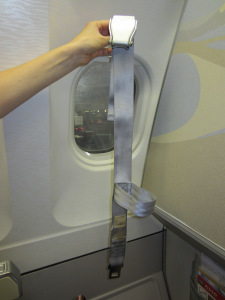
The ridiculous infant-in-lap belt

Yes, I realize “ridiculosity” is not a real word.  But the illusion that my baby is safe with a seat belt around her tiny waist is also not real.  Some of my favorite airlines, including Etihad, have these silly infant belts they require to be worn during take off and landing around a baby or toddler sitting in its parent’s lap.  I detest these belts, and wish there was some sort of international standard for infant-in-lap safety that was logical.

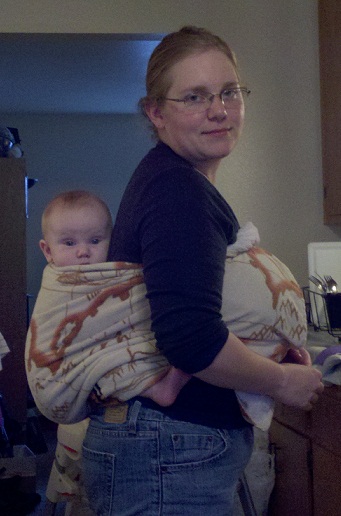
On many flights, including most U.S. carriers, flight attendants typically instruct me to hold my child in my lap facing in or out.  During take-off and landing I often try my best to breastfeed Veda, anyway, so it works well and she often ends up falling asleep in my arms, anyway.  Even better is when I have her wrapped snugly to my chest in a baby wrap, so if the plane lurches forward when it hits the runway there is no little baby head also lurching forward into the seat so close in front of us.  This is my take-off and landing baby holding idea- my baby securely fastened to me in a wrap where she isn’t going anywhere.

Then there’s the dreaded infant belt that some carriers require.  When I’m handed one, something close to rage always bubbles up inside of me, because I intuitively know this thing is actually more dangerous than anything else.  It’s basically a regular belt with a large loop in the middle that is to be pulled through the parent’s own belt, attaching attaching it to the parent’s belt after it’s clasped.  The rest of it is a regular adjustable waist belt with a metal clasp that is supposed to go around baby’s waist.

Veda secured in baby wrap plus the lap belt

The first time a flight attendant asked me to do this, my baby was a new born.  You want me to strap a regular seat belt around her waist?  Confounded, I did so, and laughed at how ridiculous this thing was- my baby could easily slip in or out the bottom, and was attached to my own belt like an umbilical cord.  If for some reason I couldn’t hold on to her tightly, she would flop around and bang all the hard plastic in site, dangling from my belt.  What is the purpose of this thing?  And then there’s the fact that if she were dangling from this seat belt or pulled from my arms in this thing, the belt could actually harm her tiny little body, cutting into her or knocking the wind out of her with enough force.

We would never use a regular safety belt around an infant’s waist in car.  Why would we do that in a plane?  I always question the flight attendants who hand me the belt and instruct me to strap my baby to my belt.  Usually their standard response is, “That’s so baby is safe and secure.”  Really?  I can’t help myself from pointing out the obvious to them, but it doesn’t seem the flight attendants see the ridiculousness that I see.

So, what I do now on those Etihad or Emirates flights is wear my baby in my baby wrap anyway, and then underneath that I attach the stupid belt to avoid arguments with the flight attendants.  That way at least I know my child is actually secured to me and safe in the baby wrap, which won’t leave her dangling or banging anything if the plane were to lurch or hit the ground to hard.  The flight attendants can have the illusion that my baby is safe, and I can protect my baby from the stupid belt cutting it to her or hurting her by having her tightly wrapped to me.

What I don’t understand is why the airline industry doesn’t have a standard safety procedure for this internationally.  Everything else about the safety drill seems the same- put your own oxygen mask on before baby’s, here’s where the life vests are, etc.  Why is this one standard so inconsistent across airlines, to the point where some that require this belt, in my opinion is actually putting my child in danger?

Related Pages:

Three Reasons to Choose Baby Wearing for Travel

Bulkhead or aisle?  Choosing the Best Seats with Baby

Mumbai Traffic: Another Case for Baby Wearing

Mumbai Traffic: Another Case for Baby Wearing

We have yet to bring a stroller with us for our now 15 month old to any of the countries we have traveled with across South Asia, Africa, and South America.  The main reason is because strollers are ridiculous things to bring to places without sidewalks; in fact, they’re hazardous.  On our recent excursion to Mumbai this past week, I decided to take a short video clip (below) that I think explains more than I can in words just how ridiculous a stroller would have been.

Even in Juhu Beach, described as a “posh” neighborhood where I took this clip around 7pm walking back to our hotel from a restaurant just down the street, what sidewalks exist are filled with makeshift fruit and newspaper stands, built around a large tree, or is blocked with various parked cars.  There are numerous large and deep potholes leading down to the sewer running below the streets that a baby in a stroller could easily be pushed in to.  There are no curbs.

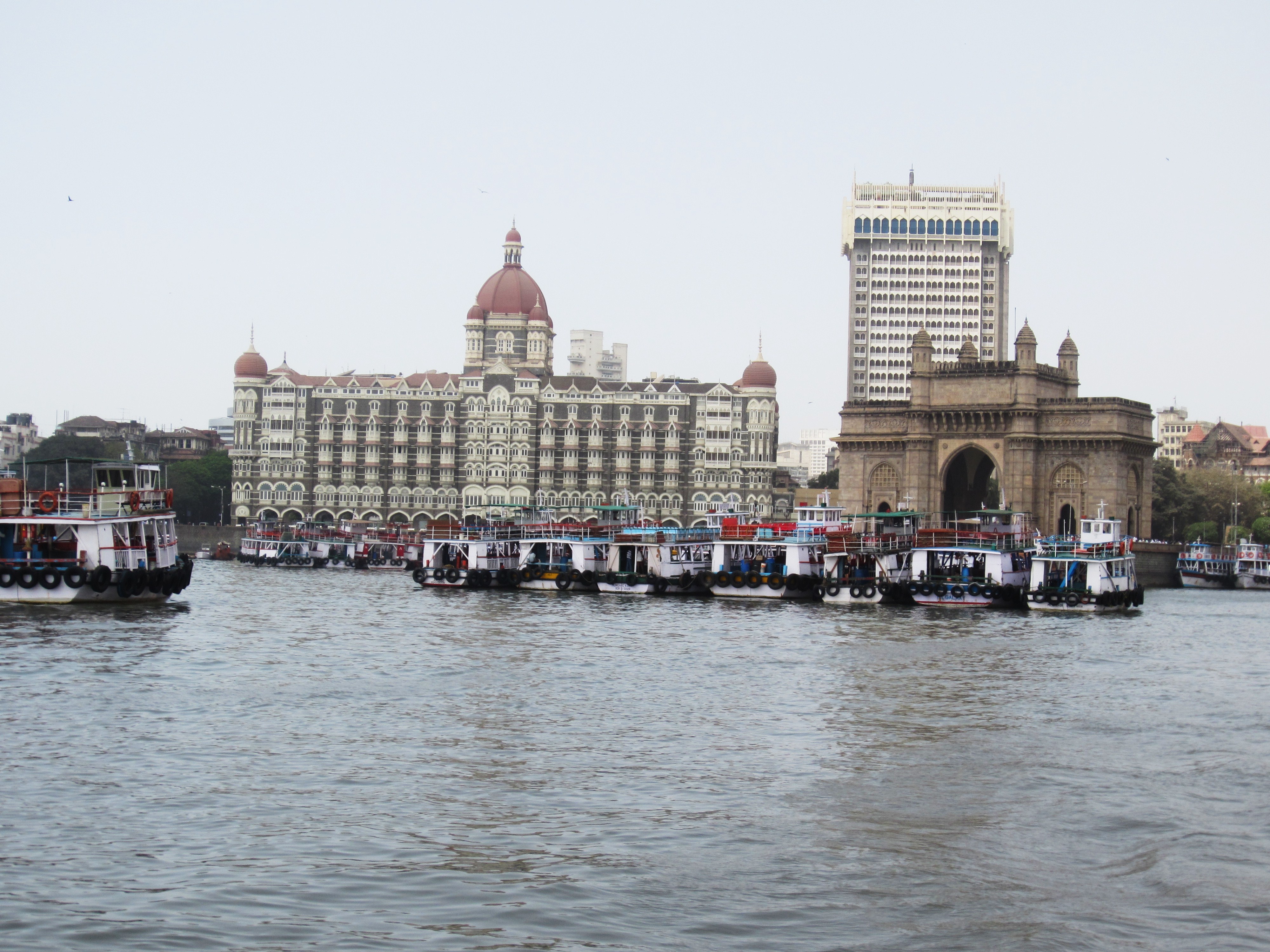
The roads in Mumbai are, of course an extreme example.  It is here where traffic crawls in some sort of elegant jigsaw puzzle of trucks, buses, cars, auto-rickshaws, motorcycles, bicycles, pedestrians, and vendors.  My husband and I decided that the safest place for our curious toddler is strapped tightly to our chests in a baby wrap- not walking beside us, and most certainly not being pushed in front of us.

Mumbai can be an exciting and very stimulating environment to explore with a baby or toddler with sights, sounds, and smells galore, but I’d suggest leaving the stroller (and the car seat) at home.

The video clip below shows the back of my husband walking with my daughter strapped to his chest through the streets of Mumbai.

Related Pages:

India

Juhu Beach (Mumbai, India)

What’s the Best Stroller for Travel?

Why Public Transportation is a Parent’s Best Friend

What is the Best Car Seat for Travel?

What is the Best Car Seat for Travel?

A car seat is not required on any airplane, although you may opt to bring one (or a child restraint system for an older child) on the plane if you purchase a seat for a child under two, or are traveling with a child over the age of 2 that may benefit from being in a seat.  However, a car seat is a must for baby to keep him/ her safe if you plan on traveling by car with baby once you arrive at your destination.

While in Chicago, we mostly use public transportation (buses, train), and do not own our own car, so we rarely use a car seat unless we are using a Zip Car or a taxi.  We own two different car seats, so I certainly have not tried traveling with many, but have looked into many different options and many are not ideal as far as bulkiness/ weight for travel.

Veda on her first international trip to Paraguay at 6 weeks

The Lily Gold Sit’N’Stroll is the only product that I have found that is a combo car seat/ stroller and that is truly convenient for international travel.  It has gone through a lot of trips with us (15 + international journeys and 40 + legs), and is still going.  It’s great because the wheels and handle (the stroller portion) just easily fold up into the car seat (like an airplane).  This makes it really easy to put baby in the seat in the airport, pop it out, push it to the airport curb, and then pop everything back in and stick baby in the back seat of a taxi or car rental (it comes both with a securing mechanism and with the ability to use a conventional lap belt to buckle across the seat).  It is also fairly lightweight compared to other seats.

It also saves on extra luggage if traveling with a stroller and a separate car seat, and is much more compact.  If you buy an airplane ticket for baby, it is also FAA-rated, so you can use it on the plane.  It’s also been great for layovers if you gate check it and retrieve the seat when you get off the plane during your layover (although we’ve found it’s much easier to just check it in with our luggage and carry around baby using the Moby wrap, and many international carriers take gate checked luggage and check it all the way through to the final destination).

The only negatives are that it’s not a stroller that I would use on a regular basis (it’s more just for in airports and to-and-from travel), and it can be clunky to deal with if you are traveling in a taxi, for example, in a developing country, and have no where to push/ put it once you arrive at your destination.  So, if you need a stroller for walks (especially in places without lovely sidewalks as the U.S. has), then you might need a regular stroller and car seat, instead.  We have personally found strollers to be pretty useless most places we go where sidewalks don’t exist and we rely on a baby wrap to carry baby around, so it has not been an issue for us.

Although I personally would never, ever travel with the Diono Radian Convertible Car Seat (read my full review), some parents swear by this car seat.  I suspect they are not taking this car seat on international trips with them.  I did purchase this seat in hopes that it might be another good option for us, but we only use it at home in a car and will not ever travel with this.  The seat does fold flat and comes with a carrying strap for transport.  It can be used forward or rear-facing, and has a 5-point safety harness, and due to its compactness parents can fit three in a row in a backseat of a car.

There are also many angry consumers that say that the SUPER LATCH mechanism that keeps the seat secured  malfunctioned and the company is unresponsive to hundreds of consumer complaints.  It looks like the company has fixed the error on all products made after 2011, and has sent out replacement latches for older models, though, so perhaps checking on manufacture date for those made after Feb. 2011 would be appropriate if you’re interested.  Newer models (under the company name Diono) since March 2011 include: Radian RXT, Radian R120 Daytona, Radian R1oo.  Older models (under the company name Sunshine Kids) that are no longer manufactured (but are still on the market for sale) include: Radian XTSL, Radian 80SL, and Radian 65SL.

Other travel car seat options that I have not personally used, but that I have read about other travelers having success with:

Hybrid Convertible Booster: This is a lightweight seat at only 11.5 pounds that folds up for easy carrying.  This is a forward-facing only seat that has a 5-point safety harness and works with kids up to 65 pounds, after which it converts to a booster seat for kids up to 100 pounds.  Although this product has received great reviews, I did not purchase one myself, as a vehicle must have a latch on the back seat in order for the seat to function (and not collapse since it has a soft back).  I wouldn’t recommend use for travel to another country, especially a developing country, where having a latch in a rental car or taxi is an unknown.

Safe Rider Travel Vest: This is a vest that a child old older than the age of three wears that attaches to a regular seat belt.  Once my oldest is old enough to not ride in a car seat and we are traveling, I may consider purchasing this as a travel-friendly lightweight option to keep my children safe when in cars overseas.

CARES Child Aviation Restraint System: This is not a car seat, and is only meant for airplane travel for children old enough to sit in their own seat.  I personally think this is unnecessary.  Parents who have used this and think it is helpful, please reply here as I would love to hear your thoughts.

If you do plan on gate checking a car seat, I recommend getting a gate check bag that it will fit into to protect it if it is checked at the gate (plane door), or a heavier duty bag if you plan on checking it with luggage.  There’s lots of room in the Jeep bag, so we can usually throw in other things along with it.  I also recommend, for any car seat or things with straps, getting strap covers to protect baby’s neck from the uncomfortable strap with a softer cushion.

Related Pages:

Travel Gear

RideSafer Car Seat Travel Vest: A Travel-Friendly Car Seat Alternative

Radian Convertible Car Seat: Not So Great for Travel

What’s the Best Stroller for Travel?

Public Transportation is a Parent’s Best Friend

Packing for Baby

Five Tips to Practice Water Health Safety with Baby

Five Tips to Practice Water Health Safety with Baby

Veda enjoying a bath in the sink at 7 months

There are lots of water-borne diseases that baby can be exposed to, whether you are hiking in the U.S. or traveling to a developing country.  With proper precautions, you can protect baby from many of these illnesses.  The following five tips are precautions that I take to keep my baby protected from water- and food-borne disease, to varying degrees depending where I am.  For example, I am much more cautious about eating out in India than I am in the U.S. or South Africa.  I use my judgment.

1) I breastfeed as much as possible.  At 14 months my baby is eating mostly solids, but I still breastfeed her as it is a great source of hydration for her.  It also minimizes her exposure to other drinks, water, and hence water-borne disease.  Breastfeeding is also a great way to re-hydrate baby in case of diarrhea.

2) I make it standard practice to sterilize all baby spoons, cups, dishes, bottles and breast pump parts (if I am working and need to be pumping milk).  If you use any sort of bottle brush for cleaning, sterilize that too.  All it requires is a big pot and a stove or fire.  After washing everything in soap and hot water, I fill a large pot with water, throw everything into the water, and boil everything for about 5-7 minutes.  Done.  Another option (if you have access to a microwave) is using sterilization bags.

3) At restaurants and out and about, be cautious about being served any water or ice, and especially for baby make sure you purchase bottled water, or bring your own boiled water for mixing formula, or giving to baby or child, etc.  For older toddlers or children, it might be best to carry with you your own juice/ drinks depending where you are, unless you can order juice in a box or water from a bottle, for example, from where you are eating.

4) I try to cook at home as much as possible and minimize eating out at restaurants when I’m in countries with baby, such as India, where food and water can be a bit more sketchy than in other places.  However, exposing baby and kids to new cuisines can be part of the fun of international travel.  For older babies, toddlers, and children that are eating solid foods, be cautious about food that is prepared in restaurants and hotels.  Food may be prepared with contaminated water, or the food itself may become contaminated.  I avoid street food and vendors and try to go

5) I am also cautious about potential swallowing of water during bath-time, because Veda loves to splash and gulp down bath water.  I watch her carefully, and allow splashing on the face if she’s having fun, but I make sure to stop her if she tries putting her mouth or face in the water to blow bubbles or swallow water.  If water is really a concern where you are, you might consider skipping the bath and just doing a sponge bath with a moist wash cloth, water, and baby shampoo.

Related Pages:

Never Leave Home Without a Health Kit

Baby’s Health

Getting Baby Immunized

Six Reasons to Choose Breastfeeding on the Go

Introducing New Cuisine

Getting Baby Immunized

Getting Baby Immunized

It’s important to stay up-to-date on routine vaccinations and visit a children’s travel clinic before traveling internationally, particularly to a developing country

It’s really important to make sure baby is getting his/her routine vaccinations, especially if traveling internationally, to protect baby from disease.  We planned our travel so that we were in Chicago at the 3, 6, 9, and 12 month routine well-baby check-ups and vaccinations.  However, if you will not be in the U.S. make sure you identify a pediatrician in the country you will be traveling to, and make sure that the routine U.S. vaccinations are available.  The CDC has a list of recommended infant and child immunizations.  Alternatively, you may talk with your U.S. pediatrician about traveling with the required vaccinations to be administered overseas if the vaccinations may not be available, or if there is concern about clean needles, etc. (this often requires special refrigeration requirements).

Next, it is important to schedule, in addition to routine well-baby visits and vaccinations with your regular pediatrician, a separate visit with a local travel clinic, preferably one that specializes in child/ infant travel.  You will provide them with your itinerary, and they will provide you with recommendations on additional travel vaccines and travel advice.  For very young babies, such as Veda who was 6 weeks, she was not able to receive any vaccinations except for immunoglobulin to give her a general immunity boost, which is why it is so important to breastfeed!  You can also check out the CDC website to get country-specific information on infectious disease and recommended vaccinations in your destination country.

Make sure to bring along with your other travel documentation baby’s up-to-date medical records and immunizations.

For those of you in Chicagoland, the Children’s Memorial Travel Clinic is fabulous.  The receptionists/ people making appointments could definitely use an improvement, but we have always been impressed by the attentiveness, competence, and personality of the health care staff seeing our child before travel.

Related Pages:

Never Leave Home Without a Health Kit

Travel Logistics

Travel Documentation

Five Tips to Practice Water Health Safety with Baby