Tag Archives: pouched baby food

Q&A: What to Feed Baby While Traveling?

Q&A: What to Feed Baby While Traveling?

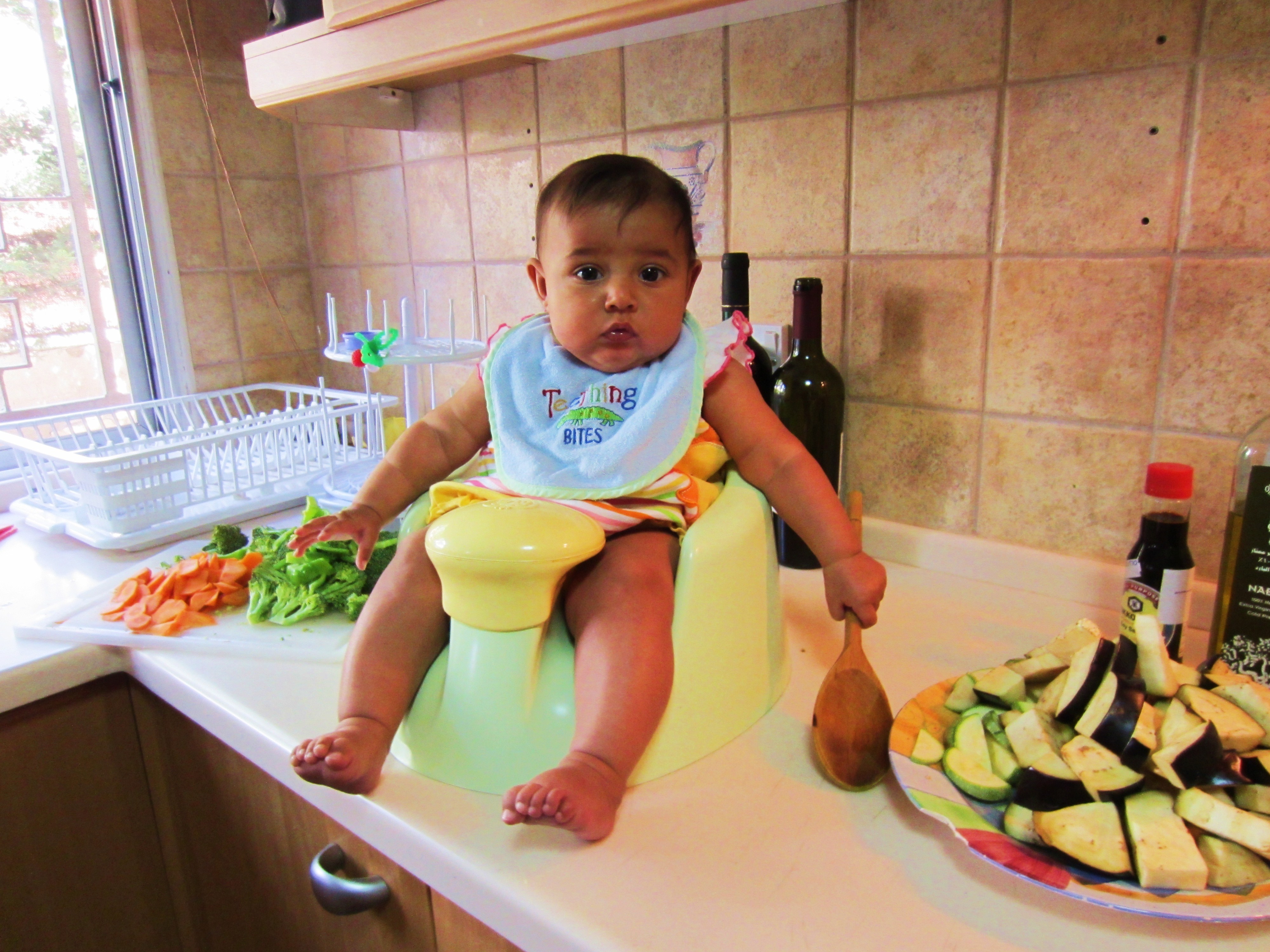
Veda "Cooking" in Amman, Jordan at Four Months Old

Question:

I’m from Singapore and will be bringing my 8 month old girl to Bangkok this weekend. I’m curious to know how you managed Veda’s meals at that age. Did you mainly rely on organic jarred/pouched baby food?

So far I have fed my girl homemade baby food and I am concerned that a sudden (and expensive may I concede) change to commercial baby food may not suit her appetite.

Answer:

Since my daughter began eating solids, we have almost 100% of the time made food for her ourselves, and we’ve tried feeding her from our plates, so she is quite accustomed to eating what we eat ourselves.  As a result, she does not like jarred baby food, and yes it is expensive, especially in a lot of developing countries!  She’s developed a taste for fresh fruits and veggies, whole grains, and flavor as well; she likes Indian curries and enjoys food flavored with cumin, coriander, garlic, cinnamon, etc.

I am happy that my daughter prefers freshly prepared food to processed jarred baby food.  But, it certainly can make traveling challenging sometimes.  I’ve had to be creative!  Here are a few following tips below based on my own personal experience with my daughter:

1) She will sometimes eat organic pouched baby food (Plum Tots and Happy Baby) which I feel better about since it’s organic and has great healthy combos like blueberry quinoa, beet/banana/blueberry.  I like these also because they are packable, and I usually bring along enough for at least one pouch per day during travel, at least for a backup in case I can’t find anything else.  However, I’ll caveat this by saying she prefers home-made food to this as well, and sometimes turns this down.  One day she’ll suck down a whole packet, another she’ll refuse it and push it away.  These brands also have healthy snacks that are great for travel, such as organic yogurt snacks.  I might add that these would be great for plane or car travel.

2) If you have a kitchen with a stove and a pot where you’ll be traveling to, you can still make your own baby food. Many places in the world have things like yams, sweet potatoes, carrots, beets, peas, etc. that can be steamed or cooked to mushiness and made into baby food.  I like to pack quinoa along with me because it’s such a fantastic super grain (a complete protein) and it’s the perfect consistency for a baby.  It can be mixed into mashed vegetables, and I add a little seasoning.  As long as allergies aren’t an issue, my baby also loves hard-boiled eggs, which is easy to do anywhere, and easy to take on the go.

3) If you don’t have a kitchen, get creative.  I sometimes bring along instant oats that I can usually just add hot water from an electric hot water heater hotels usually have for making coffee/tea.  Veda likes it sweetened with mashed up bananas, which you can usually find most places in the world.  You can try to find things that are easy to mash without needing to cook it; avocados are great, and are plentiful in numerous places.  Look out for soft fruit like ripe nectarines and berries.  Scout out the local fruit and veggie market or grocery store and focus on soft foods you can easily mash with fork/ knife at least into soft bite sized pieces that baby can gum. When you’re out and about look for things on menus such as hummus that baby can easily eat.

4) Bring along pre-prepared food for the trip. Depending on the length of your trip, you might consider making food you know your baby or toddler likes in advance and bringing it along with you.  Especially if it is a weekend to week-long trip and you don’t want to bother with cooking where you’ll be, or are worried about finding things for baby to eat, you can make a couple of batches of food for baby before you leave.  Pack it in plastic (BPA-free) containers, and then seal those in zip-lock bags to make sure you won’t have spills in your suitcase.  Of course, this will require you to have a refrigerator where you will be staying.  I’ve cleared out hotel mini-fridges before, telling the hotel to take it all away so I can make room for baby food and pumped breast milk.

5) If you’re still breastfeeding, be confident that your baby can get perfect nutrition straight from you!  My baby at 16 months is still getting about 50% of her nutrition from breast milk, and at 8 months she was still just eating food more for interest and sport.   I’d say 85% of her nutrition was still coming from breast milk at that time.  Yesterday we were out for the day and I packed numerous snacks and food options, but Veda wasn’t interested and reverted to breastfeeding much of the day.  To be honest, it’s actually easier and a lot less messy, so I don’t mind.  Babies and toddlers eat to fill themselves up when they’re hungry, and I know she’s getting the perfect nutrition, so I don’t mind reverting back to more breast milk than food when we’re traveling.

It can be stressful and worrisome to figure out how to get baby healthy nutritious food while traveling, and having a picky eater who definitely does not like the jarred food, I have had to be more creative!  I’d love to hear from other parents who have struggled with this while traveling, as well.

Related Pages:

How do you feed baby while traveling?

Six Reasons to Choose Breastfeeding on the Go

Expanding Baby’s Palette
Q&A: Food-borne Illness During Pregnancy

Guide to Getting Baby’s Liquids Through Airport Security

Guide to Getting Baby’s Liquids Through Airport Security

TSA requirements are still that you may not have more than 3.4 oz of liquid in each container, and must all fit into a quart-size clear plastic bag.  I recommend getting a reusable quart-size clear plastic bag to put all liquids under 3.4 oz of both yours and baby’s in.  This should be in an easily accessible pocket or place that can be pulled out without unpacking anything else at airport security.

When traveling with baby, you might be traveling with liquids exceeding this amount that baby needs in the carry-on and on the airplane.  TSA does allow certain items in excess of the 3.4 oz in reasonable quantities:

“Medications, baby formula and food, and breast milk are allowed in reasonable quantities exceeding three ounces and are not required to be in the zip-top bag. Declare these items for inspection at the checkpoint. Officers may need to open these items to conduct additional screening.”

I have, for example, needed to travel with pumped breast milk so that when I arrived at my destination for work I already had a stock of milk supply for baby.  I brought four bottles, each with 5 oz of breast milk, in a black zipped cooler with a freezer pack.  I just hand it to the officer, who takes it (and has never opened it), and sometimes runs a test on it, then hands it back to me on the other side of the metal detector.  I’ve never been asked further questions about it, and have never had any issues or complications.

The same goes for formula, but I would recommend instead of traveling with a bunch of liquid bottles for the trip that you instead pre-measure the powder into separate bottles and mix it as needed with bottled water that you can purchase inside the airport after security, or that you can request from a flight attendant on board any plane.

The same also goes for any baby food (within reason) that you are traveling with, or any liquid medications that may be larger than 3.4 oz.  Just make sure you tell the TSA officer about it as you place your belongings to go through screening, and do not send your milk through the screening belt!

Security regulations can vary in different countries and at different countries outside of the U.S.  It is always best to check with the specific airline or airport you may be flying through that might be able to advise you on specific rules.  However, I have found that in most places things like baby food/ milk are passed through without a problem.

Related Pages:

10 Tips for Getting Through Airport Security with Baby

15 Essentials to Include in Baby’s Carry-On

Never Leave Home Without a Health Kit

Top 10 Baby Travel Essentials

Top 10 Baby Travel Essentials

After traveling with a baby internationally over a dozen times and on over three dozen separate flights to places in Africa, South America, the Middle East, Southeast Asia, and the U.S., I’ve determined what the top travel essentials are when traveling with a baby.

1) Baby wrapthe easiest, most comfortable and efficient way to travel with a child under 2 years old

2) Back-pack style diaper bagit’s critical to choose a comfortable and well-organized diaper bag to make sure things are easily accessible and easy to carry on long trips with baby

3) Car seata safety must for any travel that involves cars, especially in developing countries which often lack public transportation options

4) Squeezable organic baby foodthe healthiest, easiest food option for baby on-the-go if you’re not able to make your own

5) Portable musicthe best source of constant entertainment, engagement, and stimulation for all ages (with lots of mileage)

6) Breastfeeding/ pumping gearneeded gear for any breastfeeding/ pumping mom that is traveling

7) Cloth diapersthe easier, cheaper, environmentally-friendly option for poo containing on the go, especially if traveling to developing countries that lack sound waste/ sanitation infrastructure

8) Point-and-shoot camera: never leave home without one

9) Health kit: this should be tailored specific to baby’s needs, but should include basics such as thermometer, fever reducer, teething relief, and gripe water, as well as any prescribed medicines

10) Wet bags and compression sacks: these keep dirty diapers, clothes, spit rags, or anything dirty separate from everything else, and traveling with a couple of x-small compression sacks will keep extra clothes changes and dirty items compact to save space

Related Pages:

Top Tips

15 Essentials to Include in Baby’s Carry-On

Making a Health Kit for Baby

10 Tips for Getting Through Airport Security with Baby